
Voltage stabiliser and relay in Batumi
We choose and fit a voltage stabiliser or monitoring relay so dips and spikes don't fry your appliances. We also add SPDs and RCDs and check the earthing.
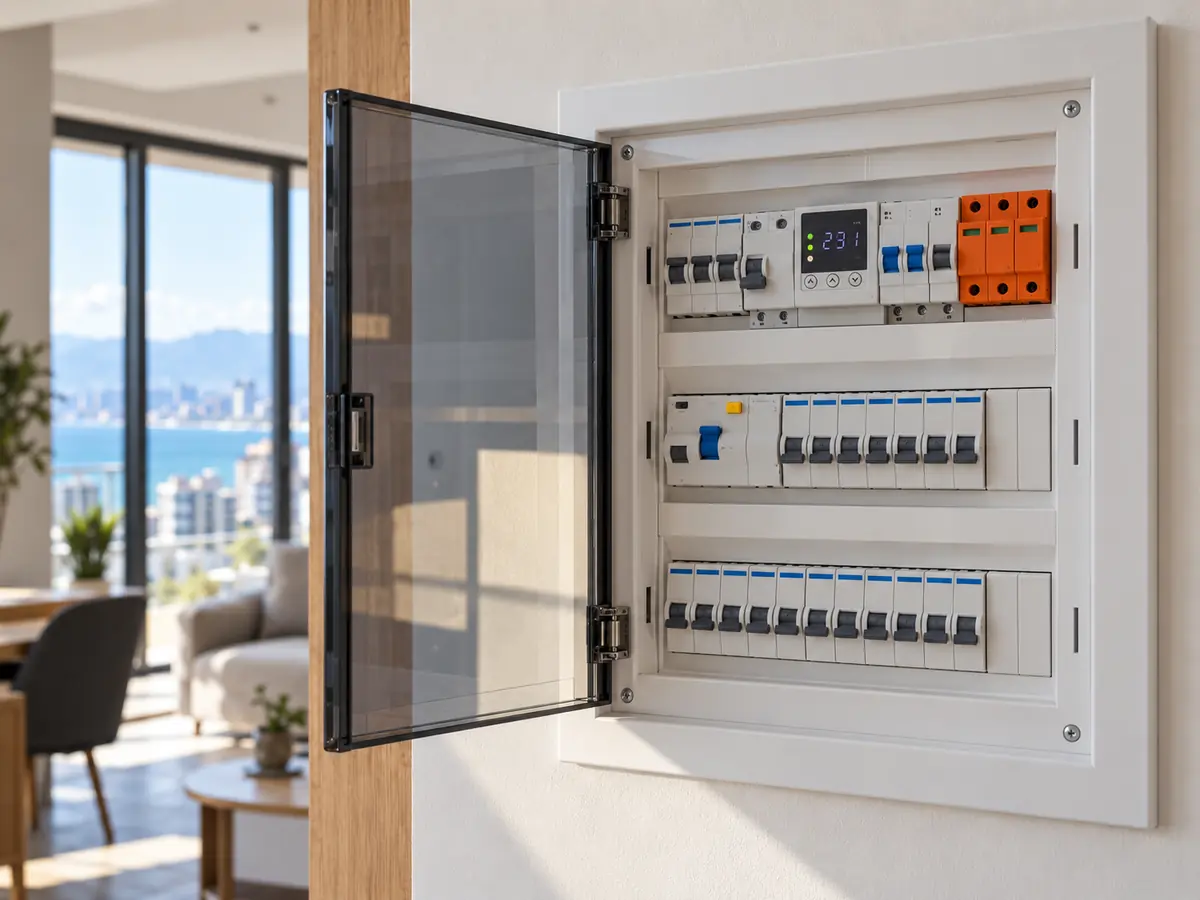
Voltage stabiliser & relay — prices and estimate
Labour prices. Materials and equipment are on the estimate or yours. Enter quantities — the total updates instantly and goes to WhatsApp as a ready message.
When you need a stabiliser or relay
- Lights flicker or dim in the evenings
- The AC, water heater or fridge shuts down with an error
- An appliance or charger burned out after a spike
- You're often away and appliances stay plugged in
- Power drops or surges during thunderstorms
- The panel has no RCD and sockets aren't earthed
What’s included
- Stabiliser — for the whole flat or specific appliances, sized to the load and space
- Voltage relay — cuts power during a spike and restores it when the supply is back to normal
- Threshold setup — upper and lower limits and reconnect delay set properly
- Surge protection device — against spikes and lightning surges
- RCD per circuit — protects people from electric shock on leakage
- Earthing check — measurement, report and advice
- Panel work — neat installation and labelling of new devices
How we work
- 1
Request
- 2
Inspection and measurement
- 3
Price
- 4
Installation
- 5
Testing
Related jobs
More services: electrician
All pricesFAQ
How much does stabiliser and relay installation cost?
Fitting a stabiliser is from 120 ₾, a voltage relay is 70 ₾ and an SPD is 60 ₾. That's labour; equipment is priced separately. You get the total before work starts.
Stabiliser or voltage relay: which do I need?
A relay simply cuts the power when voltage goes outside safe limits and restores it afterwards. A stabiliser evens out the voltage and keeps appliances running through dips. If your supply often sags, get a stabiliser; a relay is worth having either way.
Do I really need this in Batumi?
Older buildings can see voltage dips in the evenings, and heavy thunderstorms bring spikes. Expensive appliances and ACs suffer first, which is why relays and SPDs are common here.
I live abroad and rent the flat out. What should I fit?
At least a voltage relay and an SPD: if there's a spike, the flat disconnects itself and reconnects when the supply is normal. For an Airbnb or Booking flat that means fewer breakdowns between guests.
Does an RCD protect against voltage spikes?
No. An RCD protects people from shock on current leakage; spikes are handled by a relay and an SPD. An SPD does very little without proper earthing, so we check the earthing first.
Voltage stabilisers and relays in Batumi: protecting appliances from surges
Flickering lights, bulbs that burn out within a month, a burnt-out circuit board in an air conditioner or boiler. These are all signs of unstable mains voltage. The nominal voltage in Georgia is 220 V, but actual values in a building fluctuate, especially as the load rises. Installing a voltage stabiliser and relay in Batumi protects expensive appliances from whatever comes in through the wires from outside.
Relay or stabiliser
These are different devices with different jobs.
A voltage relay disconnects the flat if the voltage goes beyond acceptable limits and restores power once the mains returns to normal. It doesn't correct the voltage; it simply doesn't let a dangerous one through. It is fitted in the electrical panel at the incoming supply and protects everything at once.
A stabiliser evens out the voltage: it raises it during a dip and lowers it during a spike. It is fitted for the whole flat or for individual appliances, for example a gas boiler with an electronic board or a fridge.
A relay is worth installing in any case. A stabiliser is added if dips are frequent and long, and the appliances are sensitive.
Setting the thresholds
A relay works only as well as it is set up. The electrician sets the upper and lower cut-off thresholds and the delay before power is switched back on. The delay matters for fridges and air conditioners: a compressor that restarts immediately after a cut-out runs overloaded.
SPDs and earthing
A surge protection device (SPD) suppresses short but powerful spikes, for example from lightning-induced surges. But an SPD without working earthing is practically useless: the surge has nowhere to go. That's why before installation we check the earthing and take a measurement with a report.
And a common misconception: an RCD does not protect against voltage surges. Its job is different: to cut off the circuit if current leaks, so that nobody gets a shock.
A flat with nobody in it
This protection is especially useful in apartments that stand empty for months or are let on a short-term basis. The fridge, water heater, router and cameras stay switched on unattended, and if a surge hits the mains during that time, there's nobody to notice the consequences. The automatic protection cuts the power by itself and restores it by itself once the voltage is back to normal.
Installation prices
- Voltage relay: from 70 ₾.
- Voltage stabiliser: from 120 ₾.
- SPD: from 60 ₾.
- RCD for a separate circuit: from 40 ₾.
- Earthing check: from 150 ₾.
Equipment is paid for separately; we tell you the price of the work before we start.
How we install it
- You describe the problem and send a photo of your electrical panel.
- The electrician measures the voltage and checks the earthing and the load.
- Gives you the price.
- With the power off, installs the equipment and labels it.
- Sets the relay thresholds and tests that it trips.
We guarantee the installed protection for 12 months.
Protect your appliances
Send a photo of your panel on WhatsApp — we'll tell you whether you need a stabiliser or a relay and quote before work.