
Electric underfloor heating in Batumi
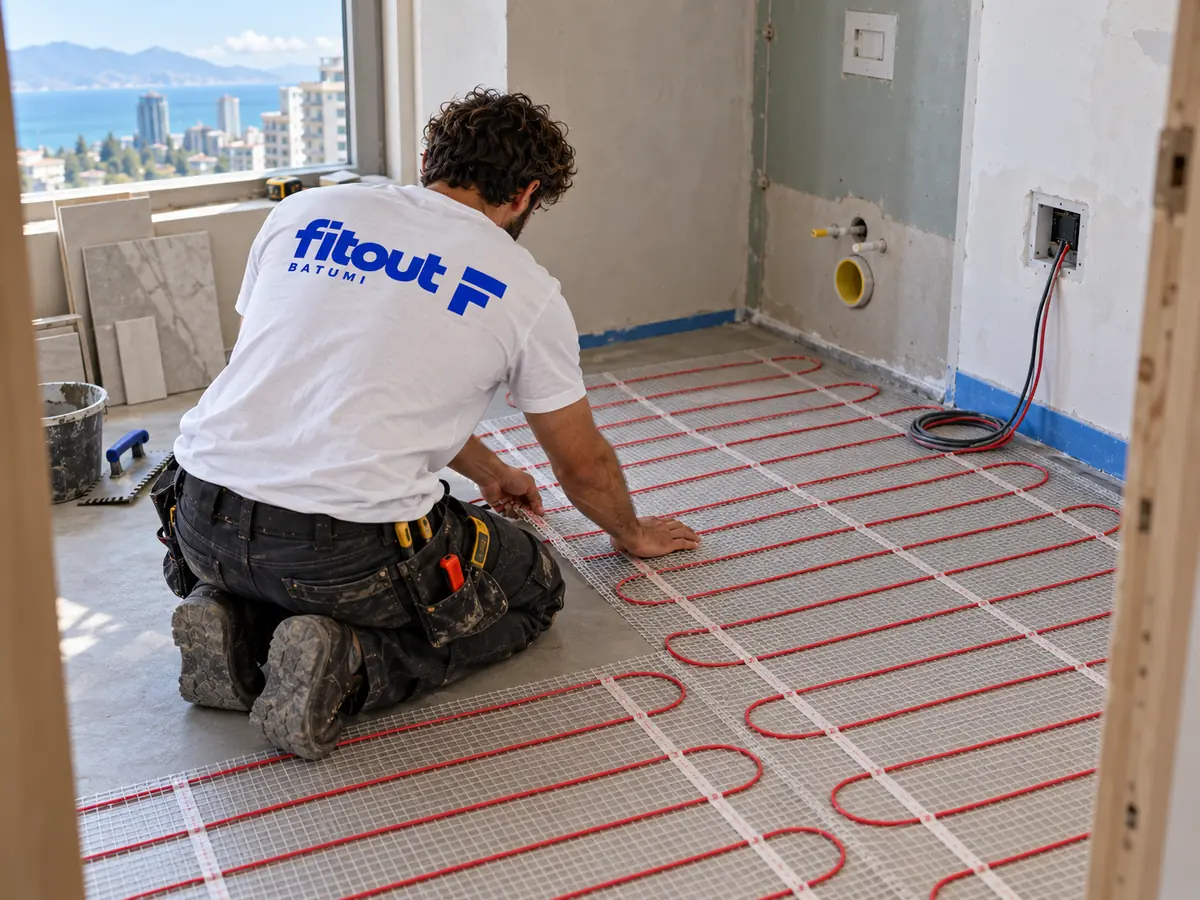
We install underfloor heating under tiles and laminate: mats, cable or infrared film, a thermostat and a dedicated circuit. Resistance is measured before and after laying.
Electric underfloor heating — prices and estimate
Labour prices. Materials and equipment are on the estimate or yours. Enter quantities — the total updates instantly and goes to WhatsApp as a ready message.
When you need underfloor heating
- Cold bathroom and kitchen tiles in winter
- No central heating and the air conditioner dries the air
- Bathroom floor takes ages to dry in damp weather
- You are renovating — the best time to lay a mat under tiles
- Old underfloor heating stopped working or trips the RCD
What’s included
- Power calculation — for the area, floor finish and your panel capacity
- Mat or cable — in tile adhesive or screed under tiles and porcelain
- Infrared film — dry installation under laminate and parquet
- Thermostat with floor sensor — sensor in a conduit so it can be replaced
- Dedicated circuit — breaker and RCD from the panel
- Tests and photos — resistance before and after laying, photos of the layout
- Repair — finding a break without lifting the whole floor
How we work
- 1
Survey and calculation
- 2
Circuit and thermostat
- 3
Laying
- 4
Tests and photos
- 5
Commissioning
Related jobs
More services: electrician
All pricesFAQ
How much does electric underfloor heating cost?
Mats or cable under tiles start from 30 ₾ per m², infrared film under laminate from 25 ₾ per m², and a thermostat with installation and set-up is 50 ₾. We give the exact total after a survey and agree it before work starts.
Mat, cable or film — which one?
Mats and cable go into adhesive or screed under tiles and porcelain. Film is laid dry under laminate and parquet and is never set in tile adhesive.
Is it worth it in Batumi with its mild winters?
Yes, mostly for comfort and dryness: most flats have no central heating, winters are damp and tiles stay cold. Owners usually heat the bathroom, kitchen and hallway and keep air conditioners as the main heating.
When can I switch it on after tiling?
Only once the adhesive or screed has fully cured, following the manufacturer's instructions — usually about a week for adhesive and about a month for screed. Switching on too early can cause cracks.
Do you do water underfloor heating too?
Yes, our plumber installs it as a separate service. In flats electric is the more common choice: no boiler connection and no water in a loop under the floor.
Electric underfloor heating in Batumi: warmth where it is damp
Winter in Batumi is rarely frosty, but cold tiles in the bathroom and damp air in the hallway are felt very much for real. Many apartments have no boiler with radiators, and an air conditioner on heating mode dries the air and does not warm the floor. Electric underfloor heating is usually fitted in the bathroom, the kitchen and the hallway: where people walk barefoot, where shoes dry and where tiles need to dry out after a shower.
Mat, cable or film
The choice depends on the floor covering.
- A heating mat or cable is laid under tiles: in the tile adhesive or in the screed. This is the option for the bathroom, kitchen and hallway.
- Infrared film is laid dry under laminate or engineered wood flooring. It is never set in adhesive.
A wrong choice is expensive: film set in adhesive fails, and cable under laminate without a screed heats unevenly.
Installation prices
- Installing a mat or cable under tiles: from 30 ₾ per m².
- Infrared film under laminate and engineered wood: from 25 ₾ per m².
- Thermostat with a floor sensor and set-up: from 50 ₾ each.
- A dedicated circuit from the panel with its own protection: from 120 ₾.
- Finding a break and repairing it without opening up the whole floor: from 120 ₾.
The heating elements and thermostat are paid for separately.
Where cable must not be laid
The heating element is laid only on the open part of the floor. Under a bath, a toilet, kitchen cabinets and built-in furniture the heat cannot rise, so the cable overheats and eventually fails. That is why the calculation starts with a furniture layout plan: the heated area is almost always smaller than the floor area of the room.
How we work
- Inspection and calculation: the heated area excluding the spaces under furniture and sanitaryware.
- Running a circuit from the panel and installing the thermostat.
- Laying the heating element.
- Measuring resistance and insulation before and after laying, photos of the layout.
- Switching on once the mix has dried.
We take photos of the layout before the floor is covered with tiles or laminate. If years later you need to find a fault, the picture will show where the cable runs.
When you can switch it on
There is no point rushing. After laying in tile adhesive, the floor is usually switched on after about a week; after a screed pour, after about a month. The exact time is set by the mix manufacturer's instructions. If you switch it on sooner, the adhesive or screed will dry unevenly and may crack.
A sensor that can be replaced
We lay the floor temperature sensor in a corrugated conduit. If it ever fails, it can be pulled out and replaced without lifting the tiles. A small detail that saves you renovating an entire bathroom.
We give a one-year guarantee on installation. A water system running from a gas boiler is installed by a plumber; that is a separate service.
Let's plan your underfloor heating
Send us the area and floor finish — we'll suggest mat, cable or film and agree the price before work starts.